Table of Contents
- Why LED Lighting Matters in Manufacturing Plants
- Energy Efficiency and Cost Reduction Through LED Upgrades
- Best LED Color Temperature for Warehouses and Production Lines
- Technical Specifications That Impact Manufacturing Performance
- Smart Lighting Controls for Industrial Facilities
- Utility Rebate Programs for Commercial Lighting Upgrades
- Installation and Retrofitting Best Practices for High-Bay Environments
- Calculating ROI and Payback Period for LED Conversions
- Frequently Asked Questions
Last Updated: October 1, 2026
Why LED Lighting Matters in Manufacturing Plants
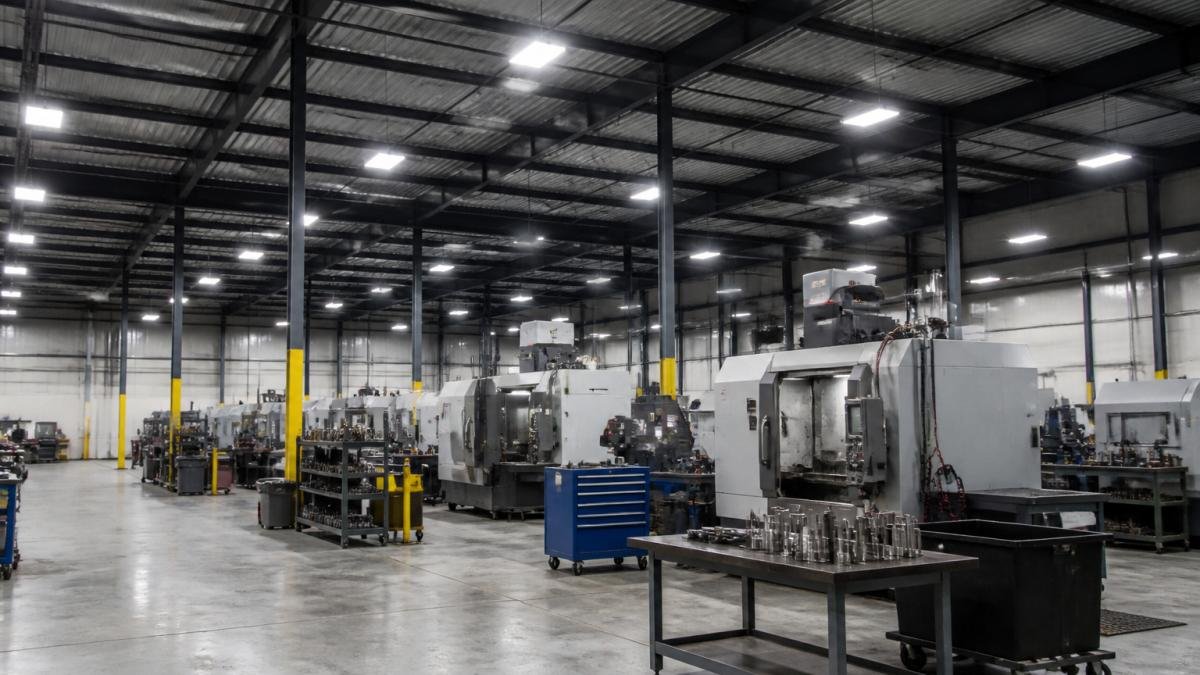
LED lighting for manufacturing plants has become essential for facility managers balancing operational efficiency with cost control.
Older lighting systems consume excessive energy, require frequent maintenance, and create safety challenges. LED lighting for manufacturing plants delivers stable, efficient illumination that lasts longer while consuming less power.
This guide covers the technical decisions, installation strategies, and financial considerations that determine whether an LED upgrade delivers real value.
Energy Efficiency and Cost Reduction Through LED Upgrades
LED fixtures consume 40-70% less energy than traditional metal halide or high-pressure sodium lamps, translating directly to lower utility consumption for facilities operating continuous production schedules.
Energy savings appear within the first billing cycle. Actual impact depends on fixture count, operating hours, and regional electricity rates.
Track baseline energy consumption for 2-3 months before installation. This creates a clear before-and-after comparison that justifies the upgrade and helps verify actual savings once the system is live.
Best LED Color Temperature for Warehouses and Production Lines
Color temperature impacts worker visibility and comfort. Manufacturing plants typically require 4000K (neutral white) to 5000K (cool white).
Technical Specifications That Impact Manufacturing Performance
IP65 and IP67 ratings indicate dustproof and waterproof protection levels. Manufacturing plants with moisture, dust, or chemical exposure require fixtures rated IP65 minimum. This rating ensures dust cannot enter the fixture and water spray from any direction won’t damage internal components.
| Specification | Standard Warehouse | High-Precision Production | Cold Storage |
|---|---|---|---|
| Color Temperature | 4000K | 5000K | 3000K-4000K |
| CRI Rating | 80+ | 90+ | 80+ |
| IP Rating | IP65 | IP65 | IP67 |
| Lumen Output | 100-150 lumens/watt | 120-150 lumens/watt | 100-130 lumens/watt |
Smart Lighting Controls for Industrial Facilities
Occupancy sensors reduce energy consumption in areas with variable foot traffic by dimming or extinguishing lights when motion isn’t detected.
Utility Rebate Programs for Commercial Lighting Upgrades
Utility companies offer rebate programs based on the quantity of fixtures replaced and wattage reduction achieved, varying by region and provider.
Rebate eligibility often requires using certified contractors and approved fixture models. Installing non-qualifying equipment or using uncertified installers can disqualify you from rebates entirely. Verify rebate requirements before purchasing fixtures or scheduling installation.
Installation and Retrofitting Best Practices for High-Bay Environments
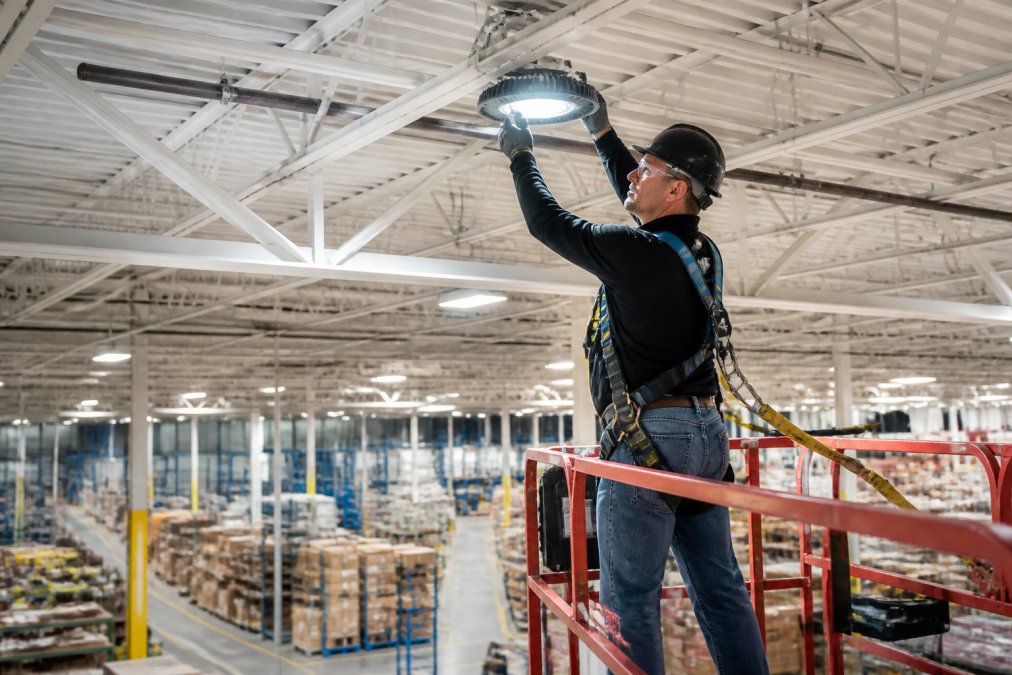
Phasing Strategy to Minimize Production Disruption
The most common approach divides the facility into zones, replacing fixtures section-by-section to maintain lighting in 75% of the facility during retrofit.
Document the production calendar 3-6 months in advance. Identify maintenance windows, seasonal slowdowns, and planned equipment shutdowns. Aligning the LED retrofit with existing downtime windows reduces negotiation with production managers and often eliminates overtime labor costs.
Electrical Assessment and Compatibility
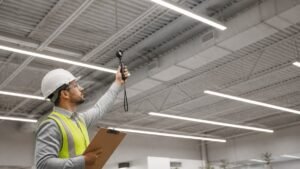
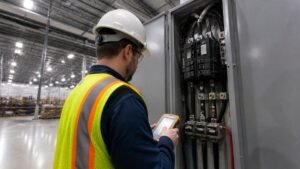
Before purchasing fixtures, a qualified electrician must assess ballast compatibility (ballast-bypass retrofits cost 15-25% less), circuit capacity, wiring condition (budget 10-15% contingency for repairs), and control integration requirements. A professional assessment costs $500-$2,000 and prevents costly surprises.
Installation Timeline and Labor Coordination
Typical retrofits proceed through preparation, fixture removal, electrical integration, new fixture installation, and testing. Total project duration for a mid-sized facility (50,000-100,000 square feet) typically ranges from 2-4 weeks with a crew of 4-6 technicians.
Schedule installation during periods when production can tolerate reduced lighting or temporary work stoppages. Installing fixtures above active production lines creates safety hazards and production risks. Many facilities require production shutdown during high-bay work, making timing critical for budget and schedule planning.
Cable Routing and Documentation
Use existing conduit and cable trays where possible. Document existing conditions and create baseline electrical diagrams showing circuit assignments and fixture locations. Organize control wiring in dedicated conduit runs to prevent interference and simplify future modifications.
Calculating ROI and Payback Period for LED Conversions
ROI calculations require total project cost, annual energy savings, and annual maintenance cost reductions. Payback period is total cost divided by annual savings.
The Basic ROI Formula
Payback Period (years) = Total Project Cost / Annual Savings
Annual Savings = (Energy Savings + Maintenance Savings)
Where:
- Energy Savings = (Old Fixture Wattage − New Fixture Wattage) × Quantity of Fixtures × Operating Hours per Year × Electricity Rate per kWh
- Maintenance Savings = (Old Fixture Replacement Cost + Labor) × Replacement Frequency − (New Fixture Replacement Cost + Labor) × Replacement Frequency
Working Example: 50,000-Square-Foot Warehouse
Assume a facility with these characteristics:
Get a Free Property Assessment →
- 200 high-bay fixtures currently using 400-watt metal halide lamps
- Operating 20 hours per day, 350 days per year = 7,000 annual operating hours
- Regional electricity rate: $0.12 per kWh
- Upgrading to 150-watt LED fixtures
- Utility rebate available: $40 per fixture
Energy Consumption Calculation:
- Current annual consumption: 400W × 200 fixtures × 7,000 hours ÷ 1,000 = 560,000 kWh
- New annual consumption: 150W × 200 fixtures × 7,000 hours ÷ 1,000 = 210,000 kWh
- Annual energy reduction: 350,000 kWh
- Annual energy cost savings: 350,000 kWh × $0.12 = $42,000
Maintenance Cost Savings:
- Metal halide lamps last 10,000 hours; LED fixtures last 50,000 hours
- Current replacement cycle: 7,000 hours ÷ 10,000 = 0.7 replacements per year
- New replacement cycle: 7,000 hours ÷ 50,000 = 0.14 replacements per year
- Cost per metal halide replacement (lamp + labor): $150
- Cost per LED replacement (fixture + labor): $200
- Annual maintenance savings: (0.7 × $150) − (0.14 × $200) = $105 − $28 = $77 per year per fixture
- Total annual maintenance savings: $77 × 200 fixtures = $15,400
Total Annual Savings: $42,000 + $15,400 = $57,400
Project Cost Calculation:
- LED fixture cost: $250 per fixture × 200 = $50,000
- Installation labor (8 hours per fixture at $75/hour): $120,000
- Electrical integration and controls: $15,000
- Total project cost: $185,000
- Utility rebate: $40 × 200 fixtures = $8,000
- Net project cost: $177,000
Payback Period: $177,000 ÷ $57,400 = 3.08 years
How Variables Change the Outcome
The payback period is highly sensitive to three factors:
Operating Hours: 24/7 facilities see payback in 2.3 years; 10-hour daily operations extend to 5.8 years. Use actual average annual hours for seasonal schedules.
Contact your utility company’s commercial energy efficiency program before designing your retrofit. Many utilities offer free energy audits that calculate your specific savings potential and available rebates. This removes guesswork from your ROI calculation and often qualifies you for additional incentives.
Beyond Payback: Lifecycle Value and Indirect Benefits
Payback period is useful for budget justification, but it understates the true financial benefit of LED conversion. Consider the full lifecycle:
Extended Fixture Lifespan: LED fixtures rated for 50,000-100,000 hours last 5-10 times longer than HID fixtures. Over a 15-year facility lifecycle, you’ll replace HID fixtures 10-15 times but LED fixtures only 2-3 times. Using the example above:
- HID replacement cost over 15 years: 10.5 replacements × $150 × 200 fixtures = $315,000
- LED replacement cost over 15 years: 2.1 replacements × $200 × 200 fixtures = $84,000
- Maintenance savings over 15 years: $315,000 − $84,000 = $231,000
Production Uptime and Quality: Reliable LED lighting reduces production errors and safety incidents. Facilities report:
- 5-15% reduction in quality control rejections due to improved visibility and color accuracy
- 10-20% reduction in workplace injuries related to poor lighting or visibility
- Reduced unplanned downtime from fixture failures
15-Year Total Value Analysis (using the example facility):
- Energy savings: $750,000
- Maintenance savings: $231,000
- Indirect production benefits (conservative estimate): $100,000
- Total benefit: $1,081,000
- Net cost (after rebates): $177,000
- Net ROI: 511% over 15 years, or 34% annually
When Payback Period Matters Most
Payback period is the primary metric for:
- Budget approval from finance teams focused on capital recovery
- Facilities planning to relocate or significantly modify operations within 5 years
- Retrofit projects competing for limited capital budgets
For most manufacturing operations, however, the decision should focus on lifecycle value and operational benefits rather than payback period alone. A 3-4 year payback is excellent for industrial equipment, and the extended lifespan and reliability benefits often justify investment even with longer payback periods.
Use the formula above with actual operating hours, electricity rate, and local rebate programs to calculate the specific payback period. Most manufacturing facilities see payback between 2.5 and 4.5 years; if the calculation exceeds 5 years, verify the electricity rate and rebate eligibility, as these are the primary variables affecting the outcome.
Frequently Asked Questions
What is the best LED light for industrial use in manufacturing plants?
The best LED lighting for manufacturing depends on your specific application. High-bay LED fixtures (typically 100-240 watts) work well for facilities with ceilings above 20 feet, while linear LED systems suit production lines requiring task lighting. Look for fixtures with IP65 ratings for dustproof and waterproof protection, color rendering index (CRI) of 80 or higher for accurate color perception, and thermal management systems that handle continuous operation. Flicker-free operation is essential to reduce worker fatigue and maintain safety standards.
How much can a manufacturing plant save with LED lighting upgrades?
Energy savings vary by facility size and existing fixtures, but most manufacturing plants reduce lighting energy consumption by 50-75% after switching to LEDs. A 50,000-square-foot warehouse might save $8,000-$15,000 annually on electricity alone. Beyond energy costs, LED fixtures last 50,000-100,000 hours (compared to 10,000-20,000 for traditional fixtures), dramatically reducing maintenance labor and replacement costs. Many facilities also qualify for utility rebate programs that offset initial installation costs, improving overall payback timelines.
Do utility rebate programs for commercial lighting really cover most of the cost?
Utility rebate programs vary by region and utility provider, but many cover 30-50% of LED lighting project costs when fixtures meet specific efficiency standards. The application process requires detailed documentation and energy audits, which is why working with an experienced partner who manages rebate coordination is valuable. Rebates typically apply to labor, materials, and disposal of old fixtures. Direct your utility company or a qualified energy consultant to confirm current rebate eligibility for your specific facility and equipment.
Can LED lighting upgrades happen without shutting down a 24/7 manufacturing operation?
Yes, with proper planning. Installation can be staged by zone or shift, allowing portions of your facility to remain operational while others are upgraded. High-bay fixtures in warehouse sections can be retrofitted during lower-traffic periods or scheduled maintenance windows. Modern LED systems also provide faster startup and dimming control, allowing phased transitions that minimize disruption. Work with your installer to develop a schedule that aligns with your production calendar and staffing patterns.