Table of Contents
- FSG vs Donnelly Energy: Overview and Service Models
- How to Choose an Energy Efficiency Partner for Your Facility
- Utility Rebate Coordination for Businesses: A Critical Differentiator
- Commercial LED Lighting Retrofit Cost: What You Actually Pay
- Project Management and Installation Capabilities
- Return on Investment and Performance Metrics
- Which Energy Efficiency Partner Is Right for You?
- Frequently Asked Questions
Last Updated: September 30, 2026
FSG vs Donnelly Energy: Overview and Service Models
When facility managers and operations teams evaluate energy efficiency partners, the choice between vendors can mean the difference between a smooth retrofit and a costly headache. FSG and Donnelly Energy are established names in the commercial energy space, but they approach the problem differently.
FSG offers broad energy consulting across multiple disciplines, while Donnelly Energy focuses on lighting and HVAC. Their service delivery models, project management, and rebate coordination capabilities differ significantly.
The key is finding a partner aligned with your facility’s specific needs: a 24/7 warehouse requires different support than a retail location, and aging electrical infrastructure demands different expertise than modern systems.
NexVolt Energy Group approaches this differently. We specialize in turnkey energy efficiency solutions for industrial facilities and warehouses, managing everything from the initial property assessment through utility rebate coordination to final installation verification. Our focus on specialized lighting solutions for high-bay environments, combined with occupancy sensors and smart controls, addresses the specific pain points that facility managers face: reducing energy consumption while improving workplace visibility and safety.
How to Choose an Energy Efficiency Partner for Your Facility
Selecting an energy efficiency partner requires evaluating expertise in your facility type, transparent project management, and commitment to maximizing rebate benefits. The decision sharpens when you understand how vendors structure service delivery and where incentives align with yours.
Assess whether the partner has relevant experience in your facility type. Ask: Have they completed similar projects? Can they reference comparable facilities? Critically, ask whether they employ in-house installation crews or subcontract work. In-house crews typically provide better quality control and faster response to on-site issues; subcontracted crews may introduce scheduling delays and communication gaps.
Evaluate their approach to utility rebate coordination, where vendor models diverge most sharply. The best partners take ownership of rebate applications, handle documentation, track timelines, and follow up with utilities on your behalf. Ask whether the partner has pre-negotiated relationships with your specific utility company; established contacts often secure faster approvals and navigate utility-specific technical requirements more effectively.
For continuous operations, ask: Can they schedule work around your production schedule? Do they have crews trained in high-access installation with aerial lifts and safety protocols? Will they provide a dedicated project manager with proactive communication? Ask whether they offer performance guarantees, committing to specific energy savings targets and adjusting pricing if results fall short. This shifts risk to the vendor and signals confidence in their methodology.
Ask about their evaluation framework and post-installation support. A thorough partner conducts comprehensive property assessment before proposing solutions, identifying lighting upgrades, control systems, sensor placement, and electrical infrastructure issues. After installation, do they provide ongoing monitoring and optimization? Smart controls allow real-time tracking and additional savings opportunities; one-time installation vendors walk away. The difference in long-term ROI is substantial.
Key differentiators to evaluate:
- Crew Structure: In-house installation teams vs. subcontracted labor
- Rebate Ownership: Vendor-managed end-to-end vs. vendor-assisted vs. your responsibility
- Utility Relationships: Pre-existing partnerships with your local utility company
- Scheduling Flexibility: Ability to work nights, weekends, or around 24/7 operations
- Performance Guarantees: Commitment to specific energy savings targets
- Post-Installation Support: Real-time monitoring, optimization, and ongoing performance tracking
A partner answering these questions clearly with specific examples and transparent explanations is worth serious consideration. One that hedges, avoids specifics, or pushes responsibility back to you signals insufficient support.
Utility Rebate Coordination for Businesses: A Critical Differentiator
Utility rebate coordination often decides whether a retrofit is cost-effective or strains your budget. Many businesses underestimate rebate potential and how easily rebates slip away due to missed deadlines or incomplete documentation.
The rebate landscape varies by utility and state. Some offer substantial incentives for LED upgrades and occupancy controls; others have specific technical requirements. A partner unfamiliar with your local utility’s requirements can propose a retrofit that doesn’t qualify for any rebate, leaving you paying full cost.
Real rebate coordination work happens before and during installation. Pre-installation: verify eligibility, confirm qualifying upgrades, understand utility technical specifications. During: document work properly, maintain compliance, prepare paperwork. Post-installation: submit applications, track status, follow up on utility requests.
Many partnerships falter when vendors propose the retrofit, installation happens, then rebate application becomes your responsibility, documentation incomplete or deadline passed. The best partners treat rebate coordination as core service, not an afterthought.
Commercial LED Lighting Retrofit Cost: What You Actually Pay
Understanding retrofit costs requires separating hardware cost from total project cost, then understanding how rebates reduce out-of-pocket expense. Many facility managers focus only on equipment price and miss the rebate opportunity that can swing a project from marginal to highly attractive.
Hardware Costs
LED fixture costs vary by type and specifications. LED fixture costs vary by type and specifications. Occupancy sensors and advanced controls add to the cost.
Installation Labor
Installation labor represents a significant portion of the total project cost. Electrical infrastructure upgrades may also be necessary depending on existing capacity.
Total Project Cost Example
Consider a warehouse with high-bay fixtures, aging electrical infrastructure, and a need for occupancy sensors. The total project cost will vary based on these factors.
Get a Free Property Assessment →
Utility Rebate Impact
Utility rebate programs vary by state and utility, but well-structured programs offset 25-50% of total project cost. Many utilities offer rebates specifically for LED upgrades and occupancy controls.
Common rebate structures include per-fixture rebates, occupancy sensor rebates, and performance-based rebates.
In the warehouse example, utility rebates can significantly reduce the actual out-of-pocket cost. The total rebate amount will depend on the specific utility program and project details.
The Rebate Coordination Variable
Vendor choice matters significantly: a partner unfamiliar with your utility’s requirements can propose a retrofit that doesn’t qualify for any rebate. A partner with established utility relationships can structure the project to maximize rebate eligibility.
Some utilities require specific fixture specifications, control system integration, or documentation standards to qualify for rebates. A vendor unfamiliar with these requirements may install a working system that generates zero rebate. One that understands your utility’s requirements can design the retrofit to maximize rebate eligibility.
Financing and Payback
Many facility managers finance retrofits, spreading costs over time. Retrofits can pay for themselves within a few years with positive cash flow after, depending on the specific project and financing terms.
Actual cost depends on fixture count, installation complexity, control systems, electrical upgrades, and rebate eligibility. A credible partner conducts site assessment, identifies all cost components, shows rebate potential upfront, and models financing scenarios for your budget.
Project Management and Installation Capabilities
Installation capability separates vendors that handle complex projects from those that struggle. High-bay warehouse retrofits require specialized equipment, trained crews, and careful planning around facility operations.
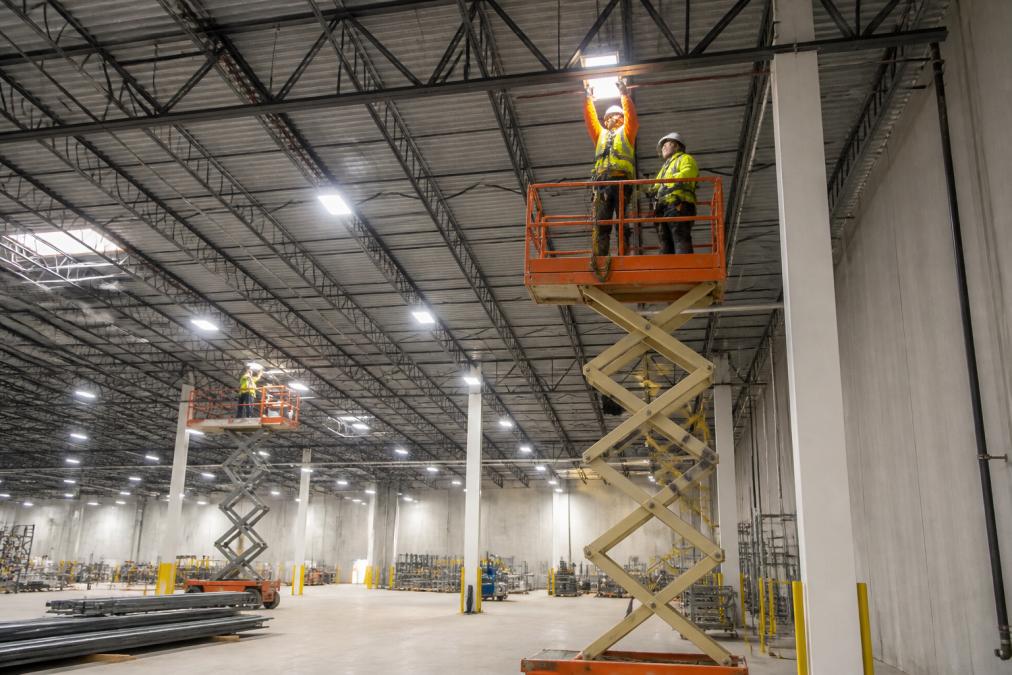
A qualified partner has crews trained in high-access installation with lifts and safety protocols, can work off-hours to minimize disruption, and has project managers who communicate proactively about timeline, obstacles, and contingencies.
Before installation: conduct site walkthrough, identify challenges, confirm scope in writing. During: maintain clear communication, address issues, document for rebate compliance. After: verify systems function and provide documentation.
Ask whether your partner can work around 24/7 operations. Some vendors only work standard hours and require shutdown; others have crews trained for nights, weekends, and maintenance windows. This capability directly impacts downtime costs and project feasibility.
Return on Investment and Performance Metrics
Measuring ROI requires tracking energy consumption before and after, accounting for rebates, and calculating payback period based on energy savings.
Most commercial LED retrofits generate 40-60% energy savings on lighting costs (Energy Department Recognizes Commercial Lighting Leaders in Interior Lighting Campaign).
Which Energy Efficiency Partner Is Right for You?
The choice between energy efficiency partners ultimately depends on your facility’s specific needs, your operational constraints, and your confidence in each vendor’s ability to deliver on promises.
The key questions to ask any partner:
- Have you completed similar projects in facilities like mine?
- Who owns utility rebate coordination, me or you?
- Can you work around my facility’s operating schedule?
- What’s your project timeline, and what could delay it?
- How will you measure energy savings after installation?
| Evaluation Criteria | What to Look For | Why It Matters |
|---|---|---|
| Facility Experience | Completed projects in similar spaces | Reduces risk of installation challenges and delays |
| Rebate Ownership | Partner manages applications and follow-up | Ensures rebates are captured and deadlines met |
| Installation Scheduling | Can work around 24/7 operations | Minimizes downtime costs and operational disruption |
| Communication | Proactive updates and clear timelines | Reduces surprises and keeps project on track |
| Performance Tracking | Helps measure actual energy savings | Verifies ROI and identifies optimization opportunities |
Frequently Asked Questions
How do utility rebate programs work for commercial LED upgrades?
Utility rebate programs offer financial incentives for businesses that upgrade to energy-efficient lighting. Your utility company or state program reimburses a portion of your LED retrofit costs after installation and verification. The rebate amount depends on the wattage reduction and fixture type. Many energy efficiency partners handle the entire rebate application process, including documentation and compliance verification, so you don’t manage the paperwork yourself. This coordination is critical because missed deadlines or incomplete documentation can disqualify your project.
What should facility managers look for when comparing energy service companies?
Evaluate whether the partner offers turnkey project management from initial assessment through rebate verification. Check their experience with your facility type (warehouse, retail, manufacturing, etc.) and high-ceiling installations if needed. Verify they provide transparent cost breakdowns and realistic payback timelines backed by data from similar facilities. Ask how they handle utility rebate coordination and what happens if your facility has underlying electrical issues that need repair before LED installation. Request references from comparable operations and confirm they can work around your operating schedule without extended downtime.
Are turnkey energy solutions more cost-effective than managing contractors separately?
Turnkey solutions typically reduce total costs and risk. When one partner manages assessment, design, rebate coordination, installation, and verification, you avoid miscommunication between multiple vendors, reduce project delays, and ensure rebate requirements are met consistently. Separate contractors may not coordinate rebate documentation properly, causing you to lose incentive funding. You also gain a single point of accountability if performance doesn’t meet expectations. The trade-off is less flexibility in choosing individual vendors, but for most facility managers, the operational efficiency and rebate success rate justify the approach.
What is the typical ROI timeline for commercial LED lighting retrofits?
Most commercial LED retrofits achieve positive return on investment, depending on your facility’s operating hours, baseline energy consumption, and available rebates. Warehouses and 24/7 operations often see faster payback. Utility rebates can reduce upfront costs, accelerating ROI significantly. After payback, LED fixtures continue operating at lower cost for many years, creating long-term savings. Your energy efficiency partner should provide a detailed cost-benefit analysis showing your specific facility’s projected savings, payback timeline, and long-term operational performance to justify the investment to your CFO.